What is demand?
Demand is based on the highest amount of electricity you use at one time during the month.
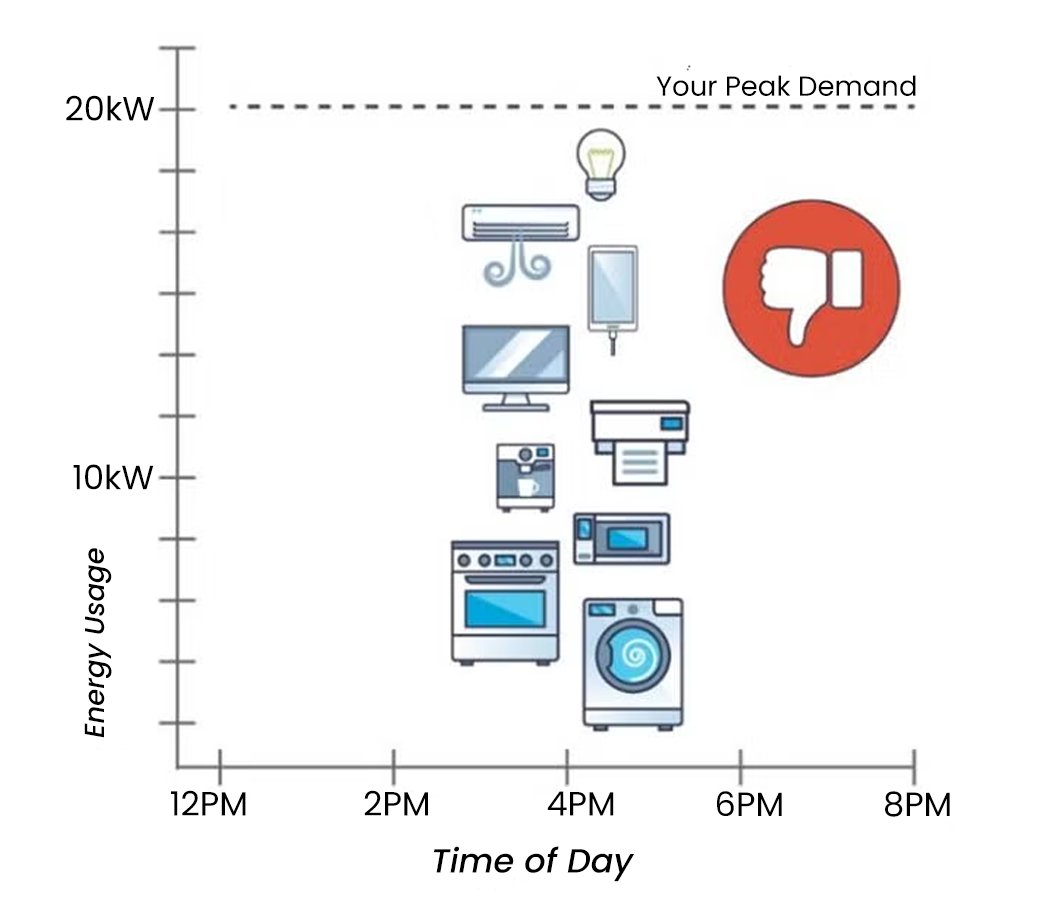
Think of it as your peak moment of electricity use. Even if you use electricity evenly most of the month, a short burst, like running your oven, dryer, and air conditioner all at once, can create your peak.
How is that different from regular energy use?
Your bill has two parts:
- Energy (kWh): how much electricity you use over time
- Demand (kW): how much electricity you use at one moment
Simple way to think about it:
- kW = how fast you are using electricity
- kWh = how much electricity you use overall
What’s the difference between kW and kWh?
It’s easier than it sounds:
Think of it like driving:
- kW = your speed (how fast you are going)
- kWh = your miles (how far you traveled)
You can drive fast for a short time or slow for a long time and still go the same distance. Electricity works the same way. 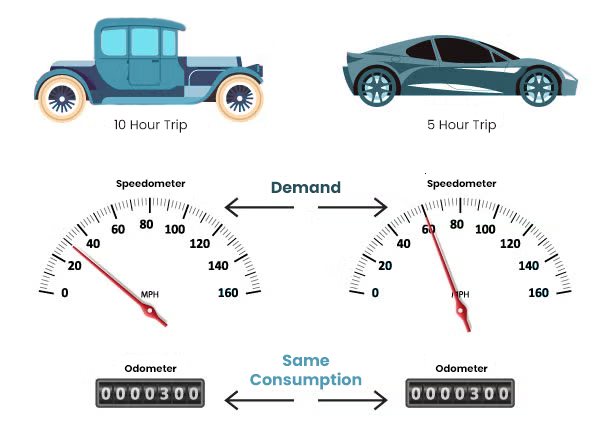
Two cars could travel the same distance, one at 10 miles per hour for 10 hours and the other at 100 miles per hour for 1 hour. It takes a much more capable and expensive engine to power the car at 100 miles per hour than it does to power the one going only 10 miles per hour.
How is demand measured?
Your meter tracks how much electricity you are using in short intervals, usually every 15 minutes. At the end of the billing cycle, we look at those intervals and find the one where your electricity use was the highest. That single 15-minute period becomes your monthly peak demand.
Key takeaway:
It’s not just how much electricity you use—it’s how you use it.
What causes a high demand?
Running several large appliances at the same time can create a spike, such as:
- Heating or cooling systems
- Water heaters
- Shop equipment or irrigation
- EV charging
How can I lower my demand?
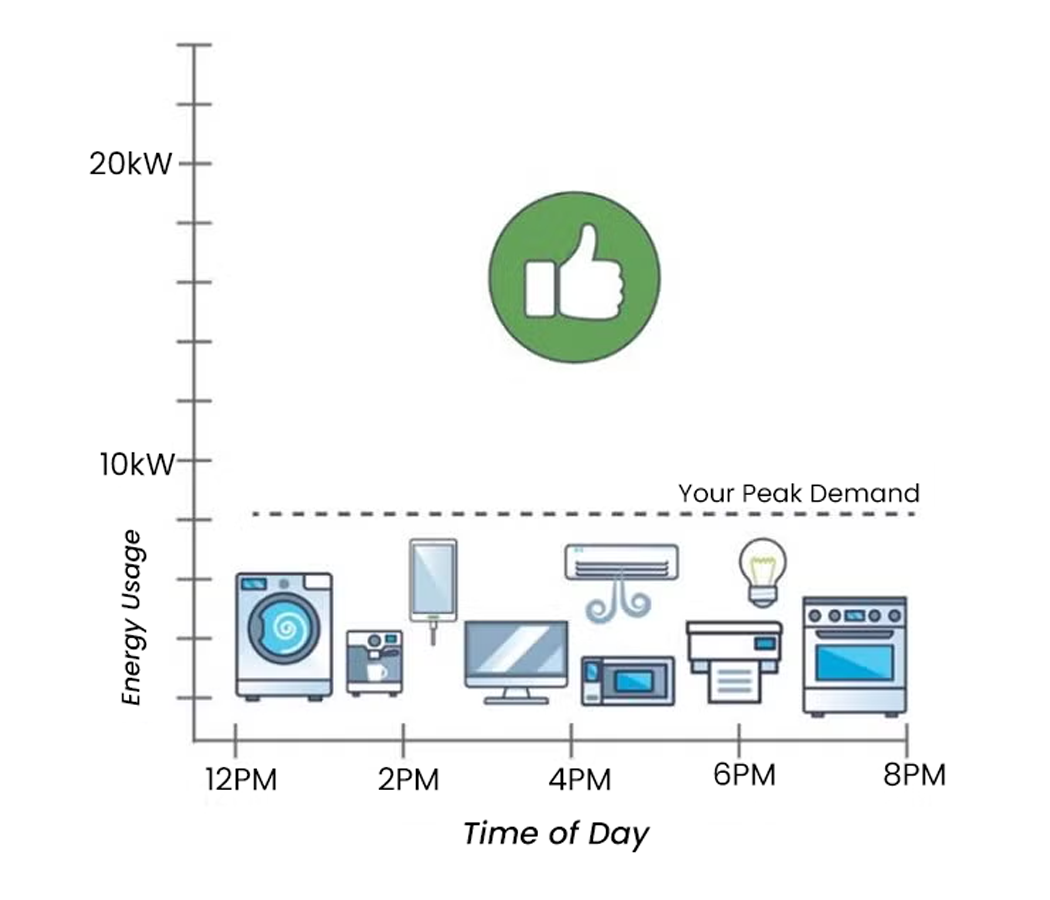
Spread out High-Use Appliances & Activities
Appliances like dryers, ovens and dishwashers use a large amount of electricity when running. Using several at the same time during on-peak hours can increase your demand and raise costs. Try running appliances earlier in the day, later in the evening or on weekends when energy use is typically lower.
Consider Energy Management Programs
Itasca-Mantrap offers Energy Management programs that help shift energy use away from on-peak hours. Programs like Off-Peak Water Heating, Dual Fuel Heating, Storage Heating and Off-Peak EV Charging can help lower energy costs while reducing demand on the system.
Many programs also qualify for reduced electric rates and rebates. Learn more about available programs and rebates on our website.
Use Smart Devices and Timers
Smart thermostats, outlet timers and delayed-start settings make it easy to shift energy use automatically. Program your thermostat to heat or cool your home before on-peak hours or schedule appliances and EV charging to run overnight.
Small changes in when electricity is used can help lower demand and create additional savings over time.
Small changes in when and how you use electricity can make a noticeable difference over time. Spreading out your energy use and avoiding running multiple large appliances at the same time can help reduce demand and better manage your electric bill. Still trying to better understand demand? We’re here to help you find solutions that fit your needs and budget through Itasca-Mantrap Electric Cooperative.
Will I see this on my bill?
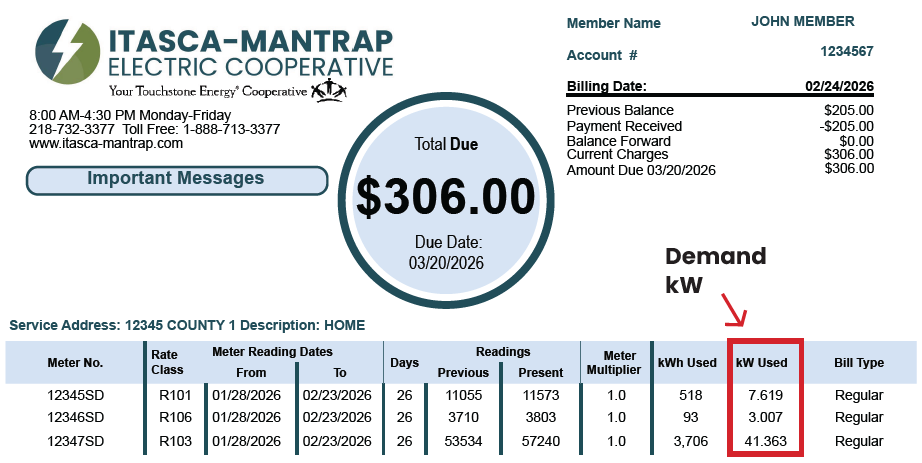
As highlighted in the April newsletter, your bill now includes a line showing your highest kW (demand) for the month as an informational tracking item. This line is not billed or charged. It is simply a tool to help you track your usage and better understand your energy habits.